How to Start Walking for Fitness: A Beginner’s Complete Guide
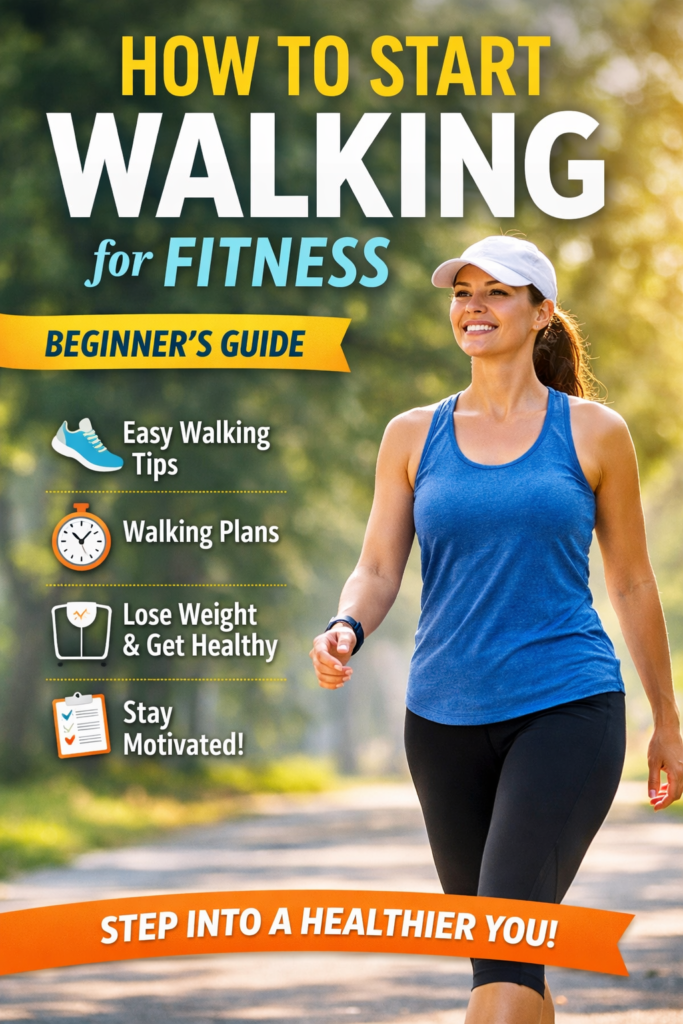
Walking is one of the easiest and most effective ways to improve your overall health. It requires no expensive equipment, no gym membership, and no prior fitness experience. Whether your goal is weight loss, better heart health, stress relief, or simply staying active, walking for fitness is a perfect starting point.
In this beginner-friendly guide, you’ll learn how to start walking for fitness safely, how long and how often to walk, and how to turn walking into a lifelong healthy habit.
Why Walking Is One of the Best Exercises
Walking may look simple, but its health benefits are powerful. Regular walking helps:
- Improve heart and lung health
- Control blood sugar and blood pressure
- Support healthy weight management
- Reduce stress, anxiety, and depression
- Strengthen muscles and joints
- Improve sleep quality
- Increase daily energy levels
Unlike high-impact workouts, walking is gentle on the joints, making it suitable for beginners, older adults, and people returning to fitness after a break.
Who Can Start Walking for Fitness?
Walking is suitable for almost everyone. If you’ve been inactive for a long time, are overweight, or feel uncomfortable with intense workouts, walking is an excellent and safe option. You can control your speed, distance, and intensity, making it adaptable to your fitness level.
If you have medical conditions, it’s always wise to consult your healthcare provider before starting any new exercise routine.
What You Need Before You Start Walking
Before starting your walking routine, a little preparation can make your experience more comfortable and injury-free.
1. Comfortable Walking Shoes
Choose shoes with good cushioning, proper arch support, and a flexible sole. Avoid flat sandals or worn-out footwear, as they can cause foot or knee pain.
2. Comfortable Clothing
Wear breathable, lightweight clothes that allow free movement. Dress according to the weather, and consider reflective clothing if walking early morning or late evening.
3. A Positive Mindset
Start with realistic expectations. You don’t need to walk fast or long on day one. Consistency matters more than speed or distance.
How to Start Walking for Fitness as a Beginner
The key to success is starting slow and building gradually.
Start With Short Walks
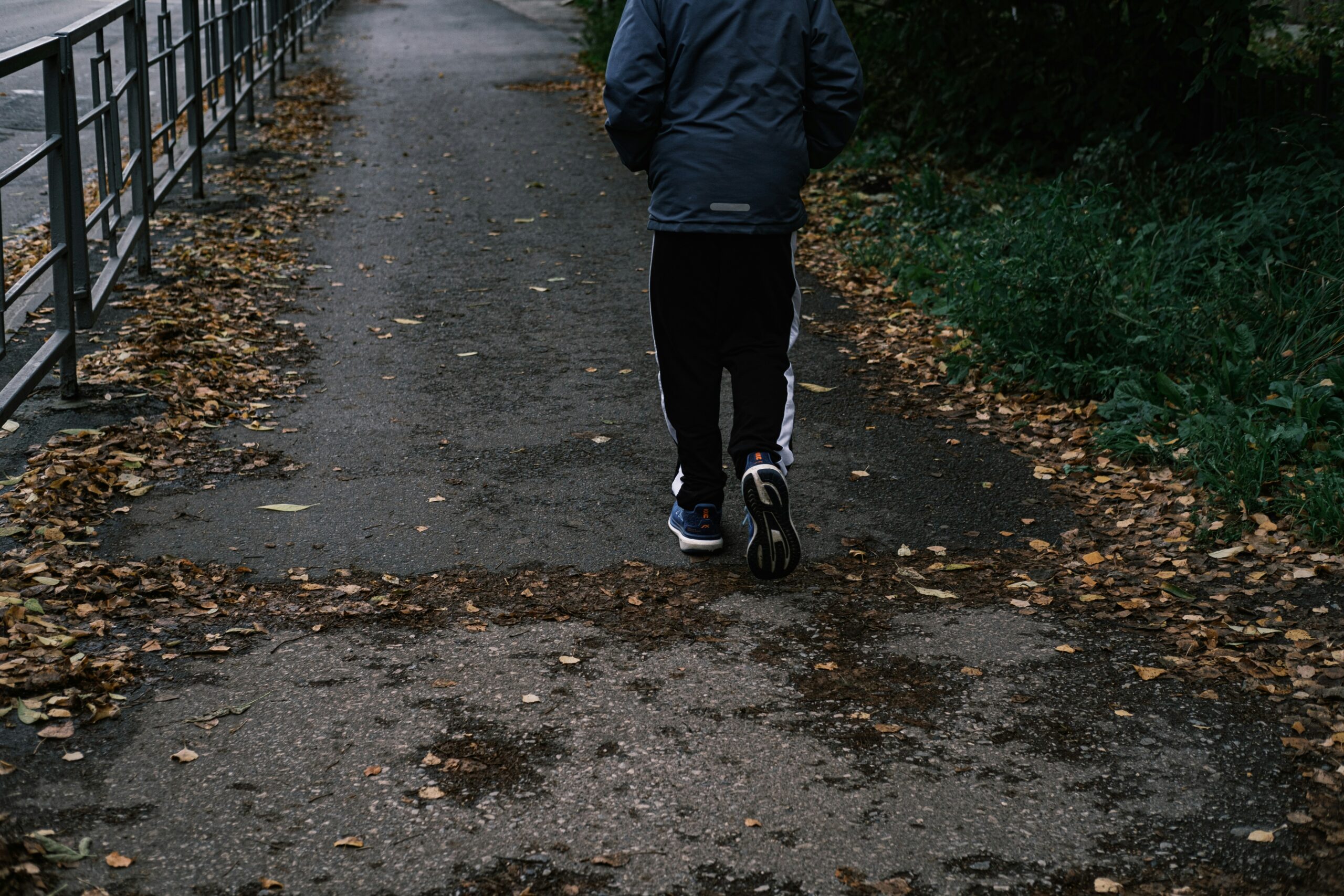
Begin with 5 to 10 minutes per walk, 3 to 5 days a week. Walk at a comfortable pace where you can talk easily without getting breathless.
Gradually Increase Time
After one week, add 5 more minutes to each walk. Slowly work your way up to 30 minutes per session.
Focus on Good Posture
- Keep your head up and eyes forward
- Relax your shoulders
- Swing your arms naturally
- Take smooth, natural steps
Good posture helps prevent back and neck pain and improves walking efficiency.
How Often and How Long Should You Walk?
For beginners, consistency is more important than intensity.
- Beginner level: 20–30 minutes, 3–4 days per week
- Improving fitness: 30–45 minutes, 5 days per week
- Health maintenance: At least 150 minutes of walking per week
You don’t have to do it all at once. Short walks spread throughout the day also count.
Walking Pace: How Fast Is Good Enough?
A good fitness walking pace is called brisk walking. This means walking fast enough to raise your heart rate while still being able to speak in short sentences.
If you’re breathing slightly heavier but not struggling, you’re walking at the right pace.
Simple Walking Plan for Beginners
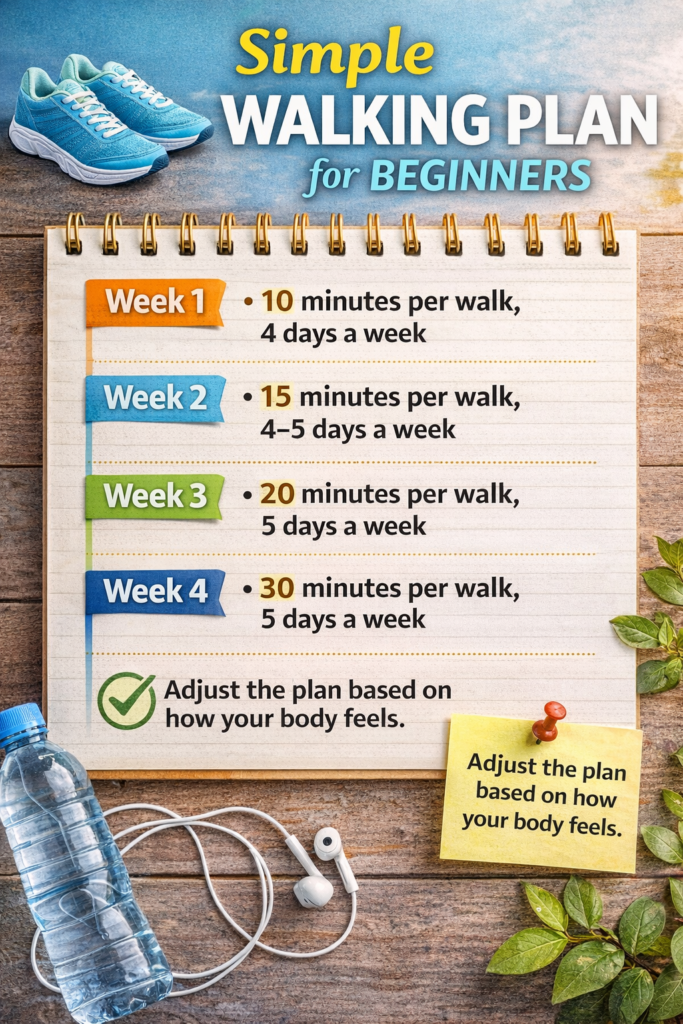
Here’s a basic beginner walking plan you can follow:
Week 1:
10 minutes per walk, 4 days a week
Week 2:
15 minutes per walk, 4–5 days a week
Week 3:
20 minutes per walk, 5 days a week
Week 4:
30 minutes per walk, 5 days a week
Adjust the plan based on how your body feels.
How to Make Walking More Effective
Once walking becomes comfortable, you can increase its benefits by:
Walking Faster
Increase your pace slightly for better cardiovascular fitness.
Adding Intervals
Alternate between slow walking and fast walking for short periods.
Walking Uphill
Include gentle slopes or stairs to strengthen your legs and burn more calories.
Using Arm Movement
Swinging your arms more actively helps engage your upper body.
Common Mistakes Beginners Should Avoid
- Starting too fast or too long
- Wearing poor-quality footwear
- Ignoring warm-up and cool-down
- Skipping rest days
- Expecting instant results
Fitness is a journey, not a race.
How to Stay Motivated to Walk Regularly
Staying consistent is the biggest challenge. These tips can help:
- Set small, achievable goals
- Walk at the same time every day
- Listen to music or podcasts
- Walk with a friend or family member
- Track your steps or time
- Explore new walking routes
- Reward yourself for consistency
Turning walking into a daily habit makes it easier to maintain long term.
Can Walking Help With Weight Loss?
Yes. Walking supports weight loss by burning calories and improving metabolism. While walking alone may not cause rapid weight loss, combining regular walking with a balanced diet can lead to sustainable fat loss over time.
Brisk walking, longer duration walks, and consistency are key factors.
Is Walking Enough for Overall Fitness?
Walking provides excellent cardiovascular benefits, but for complete fitness, consider adding light strength training and stretching. However, if walking is the only exercise you can do consistently, it is still far better than being inactive.
Safety Tips for Walking
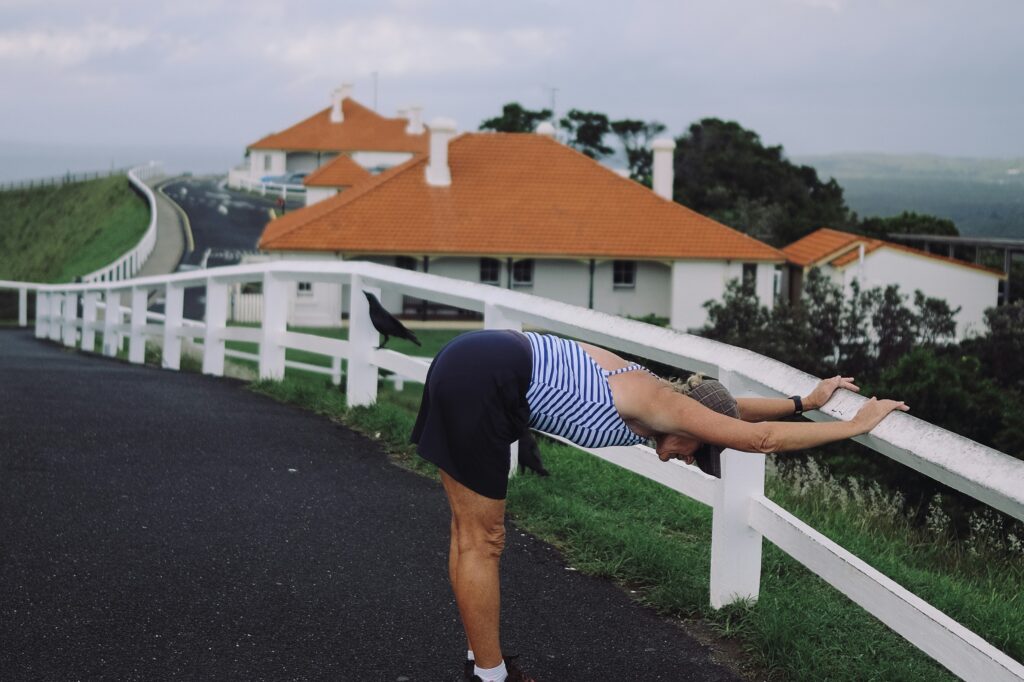
Stretch after walking
- Stay hydrated
- Walk in safe, well-lit areas
- Be aware of traffic
- Stop if you feel dizziness or pain
- Stretch after walking
Listening to your body is essential.
Final Thoughts
Walking for fitness is one of the simplest and most sustainable ways to improve your health. You don’t need special equipment or advanced skills — just commitment and consistency.
Start small, walk regularly, and gradually increase your effort. Over time, walking can transform your physical health, mental well-being, and overall quality of life.
The most important step is the first one. Put on your shoes and start walking today.
FAQs
1. How should a beginner start walking for fitness?
A beginner should start with 5–10 minutes of walking at a comfortable pace, 3–5 days a week, and gradually increase time and speed.
2. How long should I walk each day for good health?
Most people should aim for 20–30 minutes of walking daily or at least 150 minutes per week for overall health benefits.
3. Is walking better than running for beginners?
Yes, walking is better for beginners because it is low-impact, easier on joints, and reduces the risk of injury.
4. Can walking help with weight loss?
Yes, regular brisk walking combined with a healthy diet can support gradual and sustainable weight loss.
5. What is the best walking pace for fitness?
A brisk pace where you can talk but not sing is ideal for fitness walking.
6. Do I need special shoes for walking?
Comfortable shoes with good cushioning and support are recommended to prevent foot and joint pain.
7. Is it okay to walk every day?
Yes, walking daily is safe for most people and helps improve cardiovascular health, mood, and energy levels.